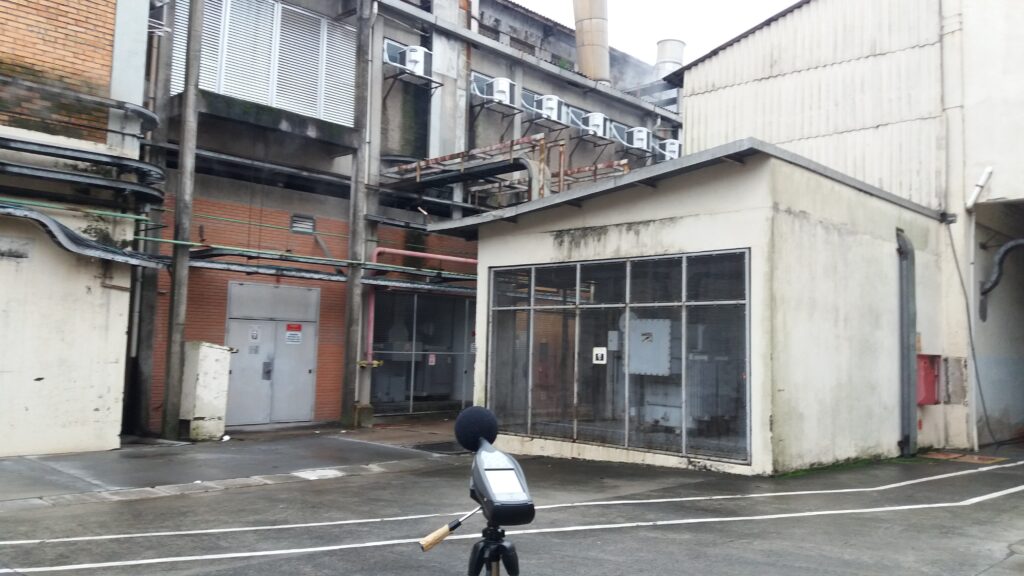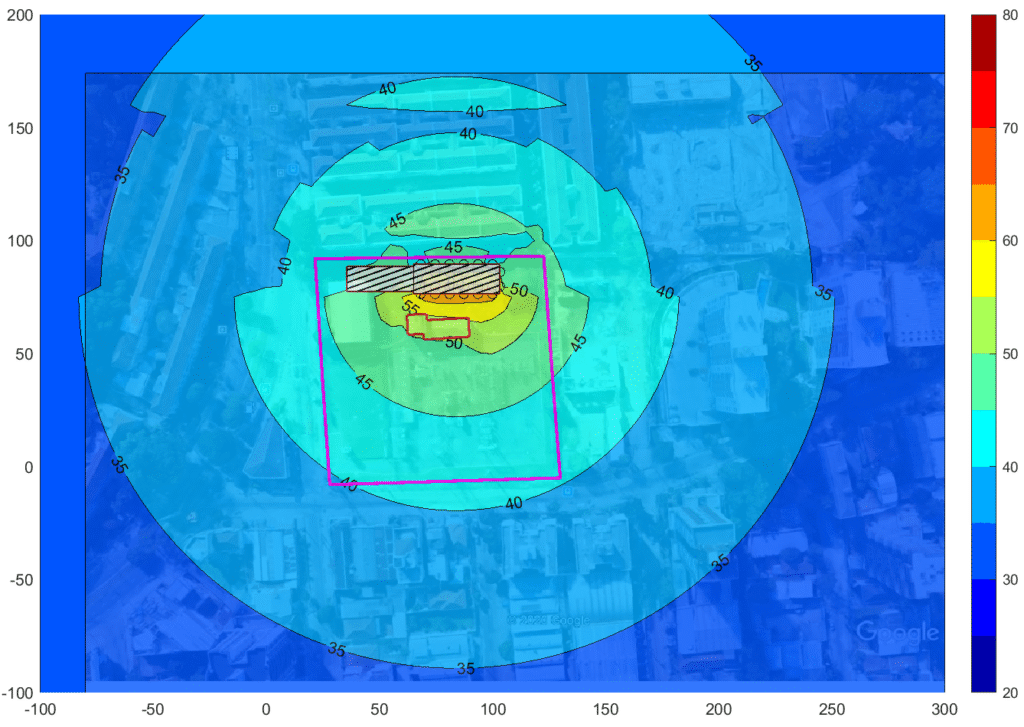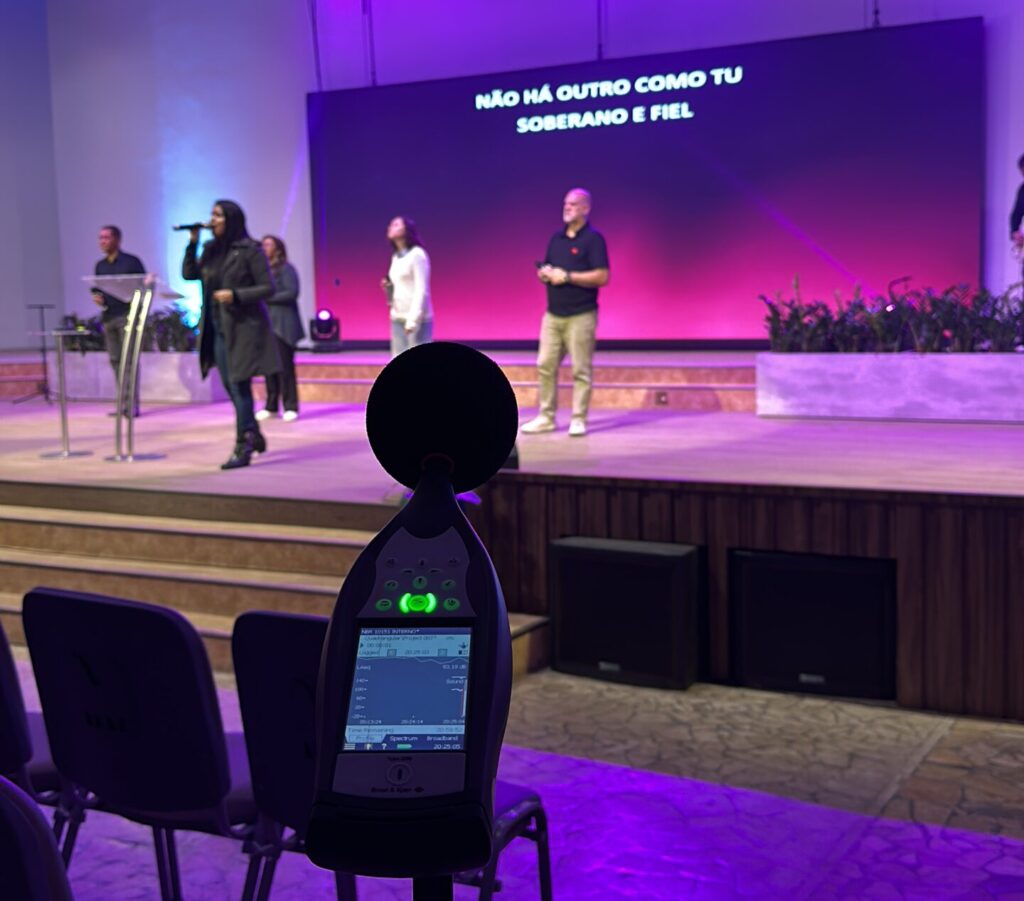
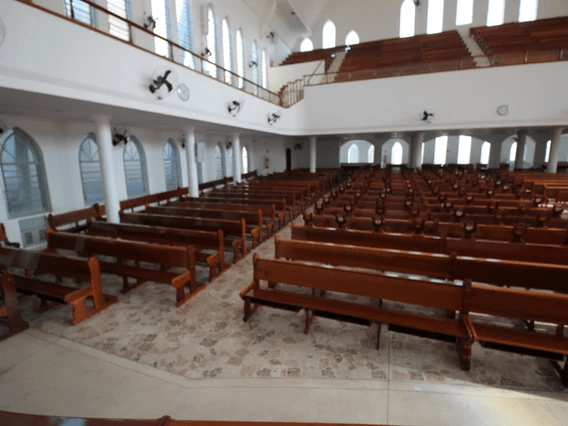
A igreja Congregação Cristã no Brasil, sede central da cidade de Sorocaba/SP, apresentava desde sua fundação na década de 80 sérios problemas de qualidade sonora. Sua arquitetura com forro em curva e praticamente nenhum material absortivo fazia com que a reverberação fosse extremamente elevada, reduzindo assim a inteligibilidade da fala e clareza da música. Para realização do projeto acústico foram feitas medições pelo método de ruído interrompido (ISO 3382 – 1) conforme mostrado no vídeo 1.
Video 1 - Acoustic measurements taken for the acoustic project.
Através das medições realizadas constatou-se um problema acústico grave na igreja. O TR da igreja estava próximo dos 5.5 segundos para frequência de 500 Hz. O TR ótimo para este ambiente segundo a norma NBR 12179 seria em torno de 1.65 segundos. Assim através de um modelo matemático chegou-se a solução de realizar a substituição do forro de gesso por um forro híbrido sendo constituído em parte por um forro metálico microperfurado e um forro de fibra vegetal conforme mostrado na Figura 1. Também foi especificado um revestimento adicional na testeira para ajuste do TR na nave da igreja.
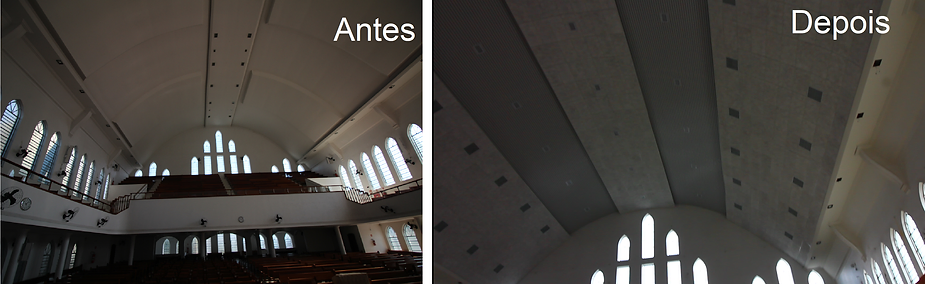
Figure 1 - Plaster ceiling (before) and acoustic ceiling (after).
Figure 2 shows the reverberation time (TR) graph before and after the acoustic project as well as the result estimated by the mathematical model.
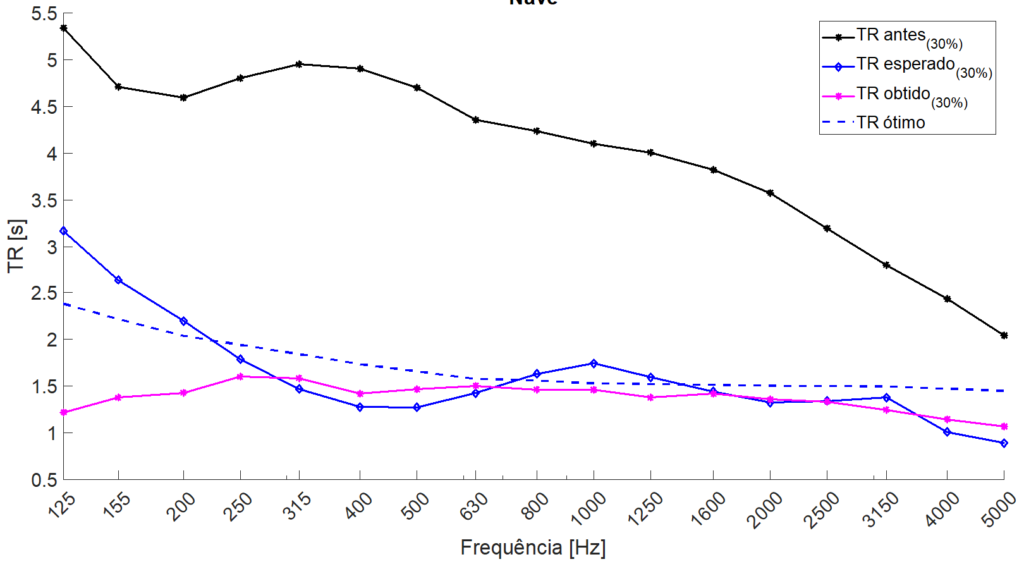
Figure 2 - Comparison between TR before, after and estimated.
These results were corrected for an occupancy of 30% in the environment. As can be seen, the results obtained were very close to those estimated above a frequency of 250 Hz. Below 250 Hz there was a distortion in the results, but even so the result obtained exceeded the design expectations. Video 2 clearly shows the reduction in TR when compared to the church before the acoustic project was carried out.
Video 2 - Acoustic measurements taken after the acoustic project.